
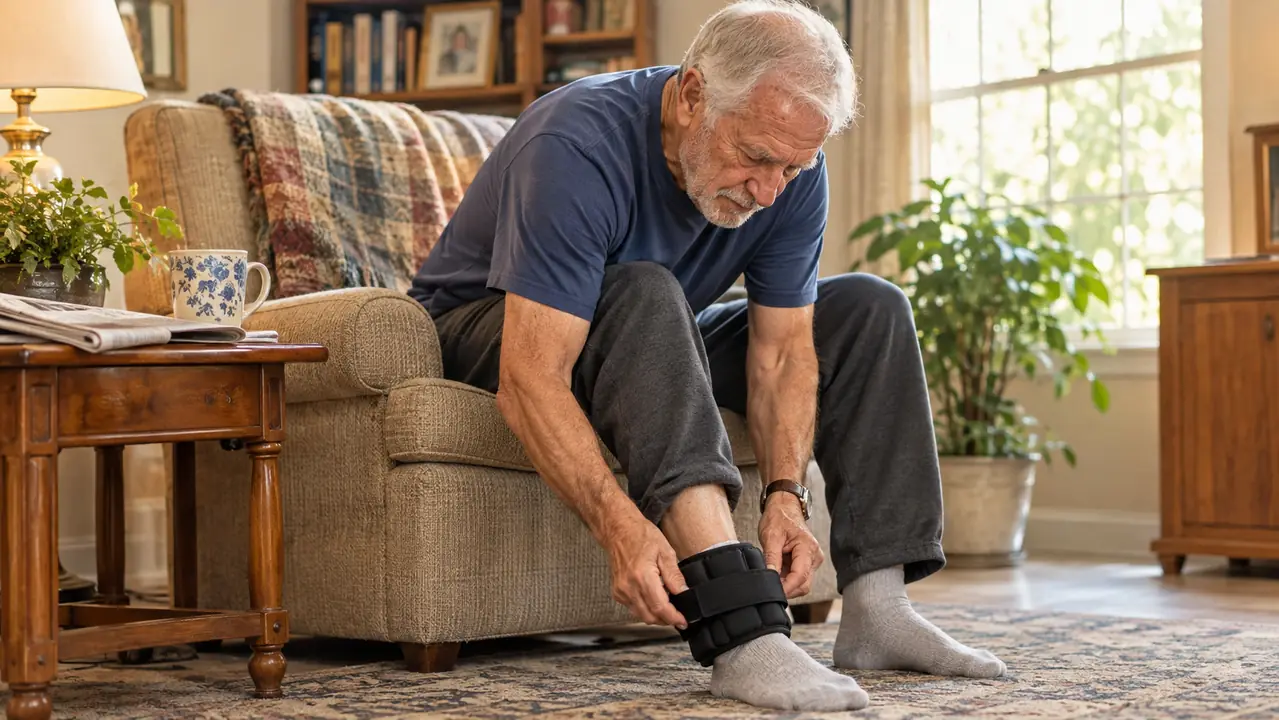
The first thing I noticed about the Sportneer ankle weights was not the weight. It was that I could take some of it out. I am 78, I live in a one-story ranch house in Wethersfield, and my knees have been filing complaints on the stairs for a few years now. My doctor did not hand me a program. She said the thing every sensible person says. Start lighter than you think you need, and keep moving. So I bought a pair that would let me begin at two pounds an ankle instead of ten, and I have used them most mornings since.
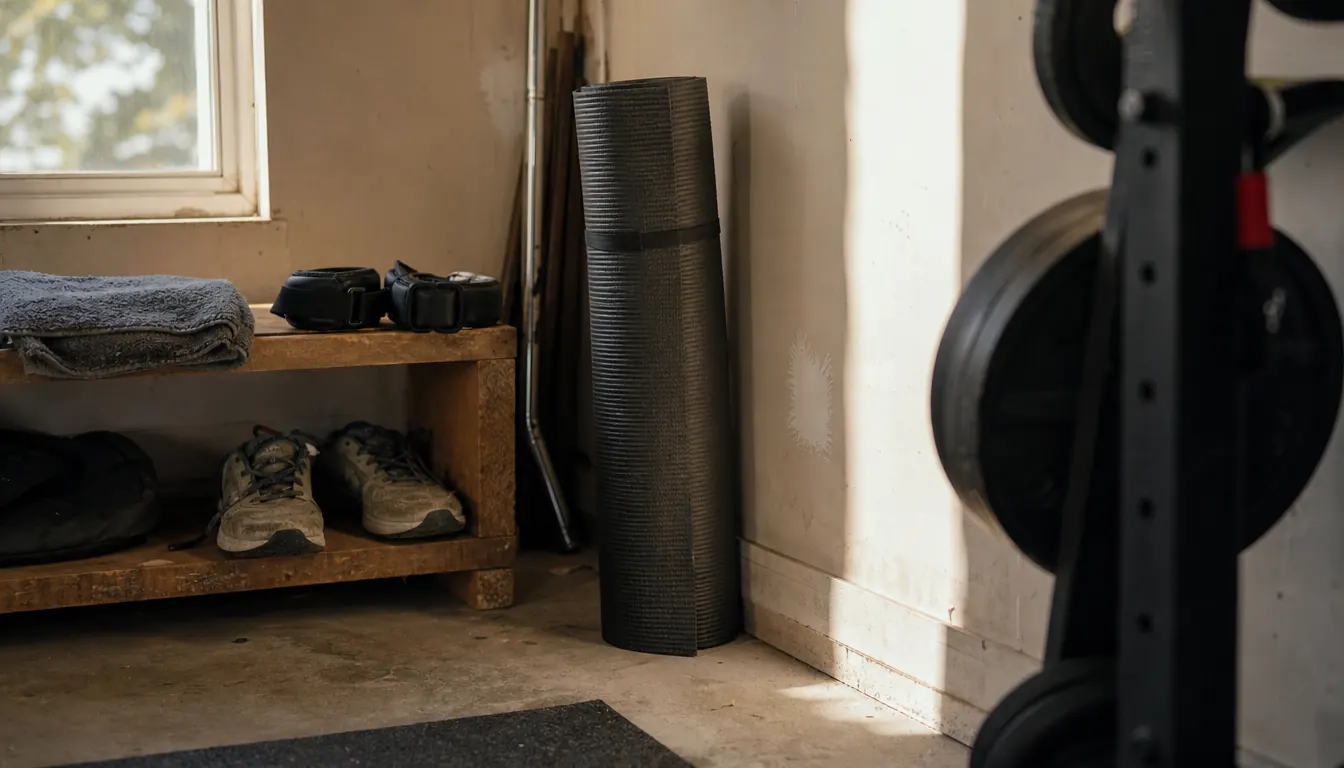
That was six months ago. The pair now lives in the corner of my garage beside a rubber mat, and it has held up better than I expected for something I paid so little attention to when the box arrived. I have opinions now. Most of them good. One of them is the reason I would not hand these to every single person who asks me about them. Before any of that, one plain statement. I am not a physical therapist and I am not your doctor. If you have a replaced joint, a balance problem that has already put you on the floor, or a diagnosis with a name, talk to someone qualified before you strap anything to your leg.
The Quick Verdict
A genuinely adjustable pair that let me start at two pounds an ankle and climb slowly over ten weeks, with one honest complaint about the strap tail on a slimmer ankle.
Amazon Check Today's Price →Start at two pounds, not ten
The whole point of an adjustable pair is that you begin where your body actually is, not where the box says. That is the case for this one.
Amazon Check Today's Price on Amazon →How I've Used It
My routine is about twenty minutes every morning after coffee. Dot and I walk after lunch, and that is a different thing entirely, so the weights stay home for it. Indoors I do leg lifts, slow marches in place, and a set of side steps along the back of the couch with one hand resting on it. The carpet is thick, which matters more than I expected. A weight that swings freely on a bare floor is a weight that is going to swing into your other ankle. I strap them on over a thin sock, snug but never tight enough to leave a mark, and I take them off the moment the set is finished.
I stayed at two pounds per ankle for the first three weeks. Not because I am cautious by nature, but because the first time I tried three I felt my lower back take an interest in the proceedings, and my lower back is a part of my body I prefer to keep bored. After a month I went to three pounds. Around the ten week mark I went to four on the leg lifts and stayed at three for anything that lifted a foot off the floor. That is the whole appeal of this pair. The number is not fixed by the manufacturer. I change it based on how the morning is going, and some mornings it goes down instead of up.
The garage corner is where the slightly heavier work happens, such as it is. A bench, a mat, and enough room to step. I do not do anything dramatic out there. Standing leg lifts, a few slow step-ups onto a low box, and that is the end of it. Twenty minutes, then coffee number two.
What Adjustable Actually Means in a Living Room
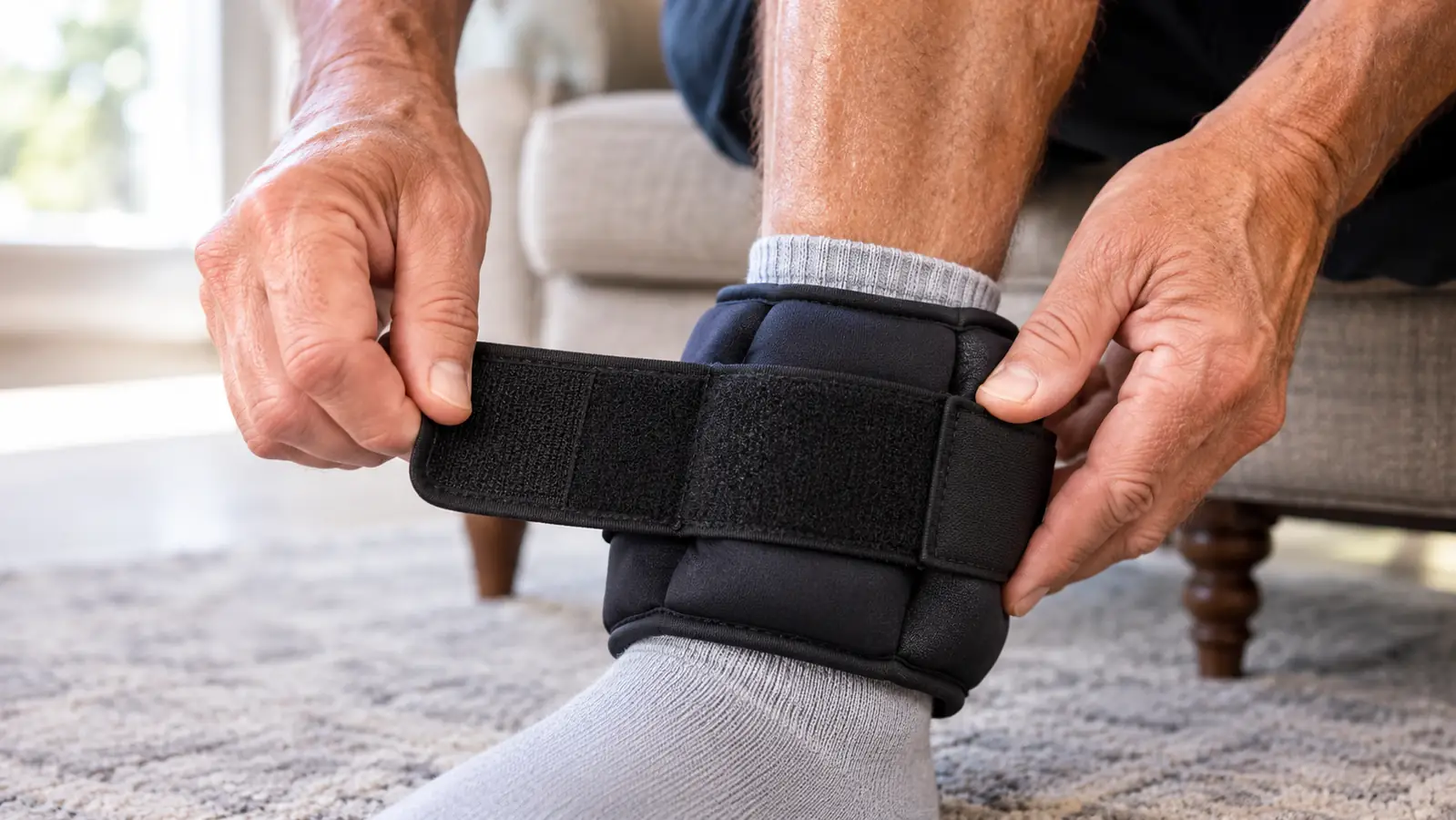
Each weight is built as a set of removable segments, and each single weight goes from one pound up to five. A pair therefore runs from two pounds to ten. You take out what you do not want and close the flap. The closure is hook and loop, the outside is neoprene over iron sand, and the whole thing is trimmed and stitched along the edge. It is not precision equipment. It is a well sewn bag of weight, and I mean that as a compliment, because it does the job and it forgives being dropped on a garage floor.
The practical benefit is not that you can go from two to ten. It is that you can go from two to three without buying a second pair. I have watched friends buy a fixed five pound pair, find it too much for the first month, and then quit outright rather than admit it. Adjustability is not a feature for athletes. It is a feature for anyone whose body changes week to week, which at my age is everyone I know.
The segments themselves slide in and out easily. Not once have I had one work loose in the middle of a set, and not once has a seam opened on me. I do check the flap before each use. It takes two seconds, and I would rather find a loose strap in my hand than on the floor beside my foot.
The Fit Question: 7.5 to 12.5 Inches
The listing says the strap fits an ankle from 7.5 to 12.5 inches, and it tells you plainly to measure before you buy. Take that seriously. I measured mine at just over nine inches, which puts me in the middle of the range, and the strap still has a good length of tail left over. Dot's ankles are slimmer than mine. When she tried one on, the tail ran long enough that she had to tuck it. It stayed put, but she did not care for it.
If your ankle measures under eight inches, that is the one thing I would think about before ordering. It is not a deal breaker. It is a detail. The same strap works on a wrist, which is how I have used a single weight on mornings when my knees want nothing to do with the idea and my arms are willing to help.
If you are near the top of that range, I would think about it too. A wide ankle in a strap that barely closes is not a secure fit, and a swinging weight on a loose strap is how people twist something in a room they were only trying to exercise in.
I went from two pounds an ankle to four over ten weeks, and I never had to buy a second pair to do it.
How the Straps Held Up Over Six Months
This is the part I actually wondered about, because neoprene and hook and loop are the two things that fail first on inexpensive gear. Six months of near daily use, and here is the honest report. The stitching along the outer trim is intact on both weights. The neoprene has not cracked or peeled at the fold, which is where I expected it to go first. The hook and loop still grabs hard enough to make a satisfying rip when I pull it open, and it still holds through a full set without creeping a half inch.
The one visible sign of age is cosmetic. The surface has gone slightly shiny where the strap doubles back on itself, and it holds a faint crease there. Neither changes anything about how it works. I have wiped them down once with a damp cloth and mild soap, dried them flat, and they came back looking the same as before. The listing mentions a moisture absorbing lining and I will take their word for it. What I can tell you is that they do not feel slick against a sock after twenty minutes of marching in place.
For a piece of home gear that gets tossed into a corner of a garage, that is more than adequate. I have owned more expensive things that lasted a good deal less.
Where They Fall Short
First, ten pounds a pair is the ceiling. That ceiling is fine for me and useless for anyone training seriously. If you are chasing a real progression on weighted leg work, you will outgrow these inside a season. That is not a flaw for the person they are aimed at. It is a limit worth knowing before you order.
Second, the tail. On a slim ankle there is a good deal of strap left over and there is no keeper loop to hold it down. Dot tucked hers and it stayed tucked. I would still rather see a small loop stitched in than a longer strap in the box.
Third, and this one matters at my age. These are not walking weights for me, not for a real walk. I tried one lap around the block with three pounds on each ankle and did not care for it at all. The weight wanted to swing, my stride got short and careful, and careful is not what I want my walking to be. I wear them for stationary work in the house and take them off before I go out the door. If walking with weights is your plan, the Sportneer pair will do it, but test it in the living room first before you commit to a mile.
Fourth, there is no storage bag. A small thing, and I am mentioning it only so the list is complete. Mine sit on a shelf with the segments left in. Nothing has gone missing.
What I Compared Them To
Before this pair I had a set of fixed two pound strap weights, the kind with a single long velcro strap and no way to change anything. They were fine for about a month and then they were too light, and the only option was to buy another set. That is the trap. Fixed weight means you either outgrow it or you quit, and quitting is the more common outcome. The Sportneer pair solved that by letting me climb in one pound steps instead of jumping to the next size on a shelf.
I also tried wearing one around the house as a wrist weight on days when my knees were not cooperating. It works, though the fit is a little bulkier on a forearm than on an ankle, and I would not wear one for anything involving fine hand work. If you are deciding between wearing weight on the ankle or the wrist, the two are not the same job and the difference is worth understanding before you spend anything. There is a side by side breakdown of that on this site, and a separate piece on why adjustable pairs suit older bodies in particular, if you want the longer version of the case I just made.
What I Liked
- Each weight adjusts from one to five pounds, so a pair runs from two to ten and you can climb in small steps
- Listed to fit an ankle from 7.5 to 12.5 inches, and the same strap works on a wrist
- Reinforced stitching and outer trim held up through six months of near daily home use
- Hook and loop closure stays put through a full set and releases cleanly
Where It Falls Short
- Long strap tail on a slimmer ankle, with no keeper loop to hold it down
- Ten pounds per pair is a low ceiling for anyone training seriously
- No storage bag included
Who This Is For
This pair is for the person who wants to add a little resistance to stationary work at home and does not want to buy three sets to get there. It suits anyone past sixty who has been told to keep moving and needs a way to make twenty minutes in the living room count for something. It suits the person rehabbing slowly, the one whose therapist said light resistance and whose body agrees with light but not with moderate. It suits anyone who wants to start at one pound per hand or per ankle and add a pound when the morning permits. I would happily hand it to a neighbor in my own situation and have already done so once.
Who Should Skip It
Skip it if ten pounds a pair is not going to be enough for you in three months. Skip it if you want a single fixed weight and nothing more, because you are paying for segments you will never remove. Skip it if your ankle measures well under eight inches and a long strap tail would drive you to distraction, or if you plan to walk a real distance in them on the first day. And skip it, at least until you have spoken to your doctor or therapist, if you have a replaced joint, a balance issue that has already caused a fall, or a diagnosis with a name attached to it. That is not caution for the sake of caution. It is the same advice I would give my own brother.
The pair I would buy again if this one wore out
Six months, most mornings, and the stitching along the trim is still holding. If you want to start light and build in one pound steps, that is the whole case for these.
Amazon Check Today's Price on Amazon →