
The Short Answer
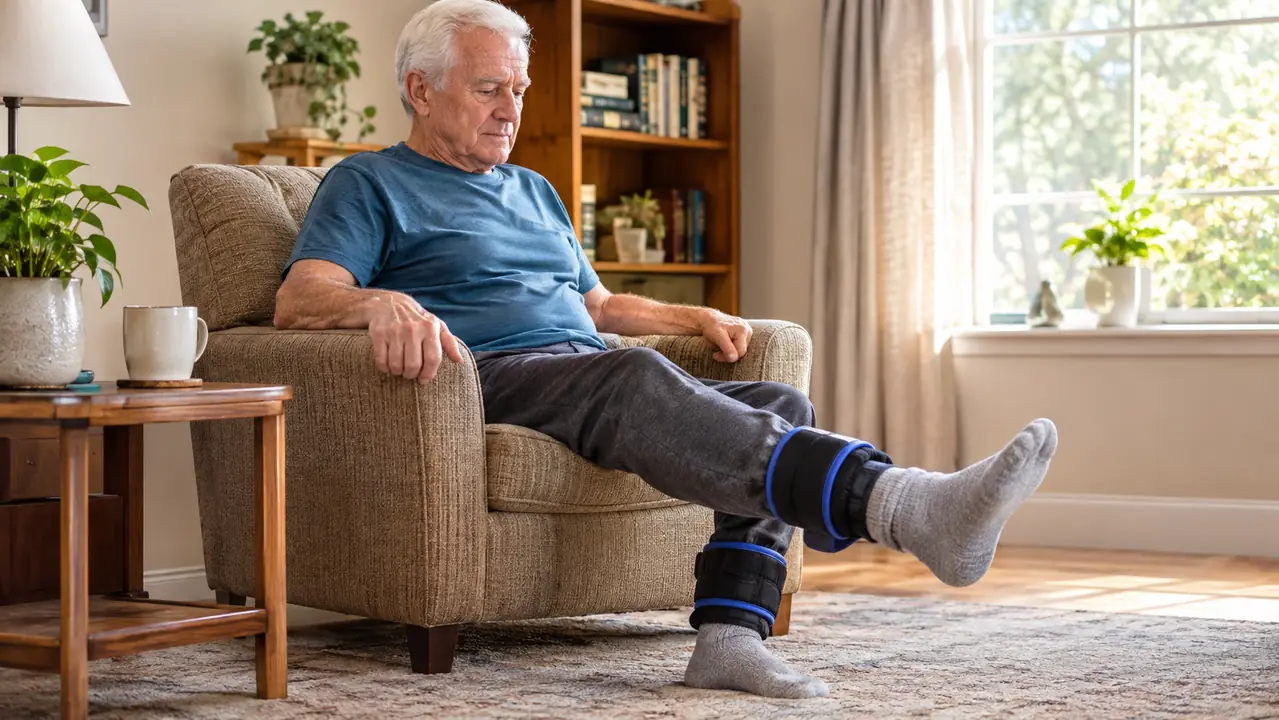
I am 78, and my knees have opinions. They speak up on stairs, in cold weather, and on the first lap around the living room after coffee. So when I started adding a little resistance to my morning movement, I did not go looking for a gym. I went looking for something I could fasten above my shoe, use beside my armchair, and forget about by breakfast. The Sportneer Adjustable Ankle Weights are the pair I kept. They adjust from 1 to 5 pounds on each side, or 2 to 10 pounds for the pair, by adding or removing weights.
Here is the short answer. If your goal is lower-body work, walking, leg lifts, or ankle and rehab exercise, ankle weights are the better tool. The Sportneer pair fits the job because the weight is adjustable and the hook-and-loop closure sits above the shoe. If your goal is arm work while seated, wrist weights are the better tool. They are smaller, they sit closer to the hand, and they do not wrap a bulky ankle weight around your forearm. The right choice depends on which half of your body you are trying to wake up. And before you start either one, check with your doctor or physical therapist, especially if you have knee, hip, shoulder, or balance issues.
| Sportneer Ankle Weights | Wrist Weights | |
|---|---|---|
| Best for lower-body work | Adds resistance to walking, leg lifts, and ankle work; the pair adjusts from 2 to 10 lbs. | Not built for ankle work; sits at the wrist and leaves the legs out of it. |
| Best for arm work | Can be worn on the wrist per the listing, but the pair is built for the ankle. | Sits close to the hand for arm raises, curls, and seated arm work. |
| Adjustability | Each weight goes from 1 to 5 lbs; the pair goes from 2 to 10 lbs by adding or removing weights. | Many fixed pairs have one weight; adjustable wrist sets exist but are less common. |
| Ankle fit | Listing says it fits ankles from 7.5 to 12.5 inches. | Not designed for ankles. |
| Closure | Hook-and-loop closure with reinforced stitching and sturdy outer trim. | Varies by brand; many use hook-and-loop closures too. |
| Walking | Recommended for walking and designed to stay at the ankle. | Can swing and shift during a walk; better for seated or standing arm work. |
| Storage and travel | A pair takes up more room than small wrist weights. | Small enough for a drawer or suitcase. |
| Materials | Neoprene exterior over iron sand, with reinforced stitching, sturdy outer trim, and moisture-absorbing material. | Depends on the brand; often fabric or neoprene over a fixed fill. |
| Rehab and physical therapy | Listing includes rehab and physical therapy among recommended uses. | Common in arm and shoulder rehab, but check with your therapist. |
| Best for | Older adults who want one adjustable pair for legs, walking, and light strength work. | Older adults whose routine is mostly arms and who want a compact set. |
Where the Sportneer Pair Wins
For lower-body work, the ankle weight has one advantage that no wrist weight can match: it puts the resistance where the leg can use it. I wear the Sportneer pair for slow marches in the living room, side steps along the kitchen counter, and seated leg extensions from the armchair. At first I used one pound on each side. A few weeks later I added another. That is the whole point of the removable weights. I can make the pair heavier without buying a second set, and I can make it lighter on a morning when my knees are stiff.
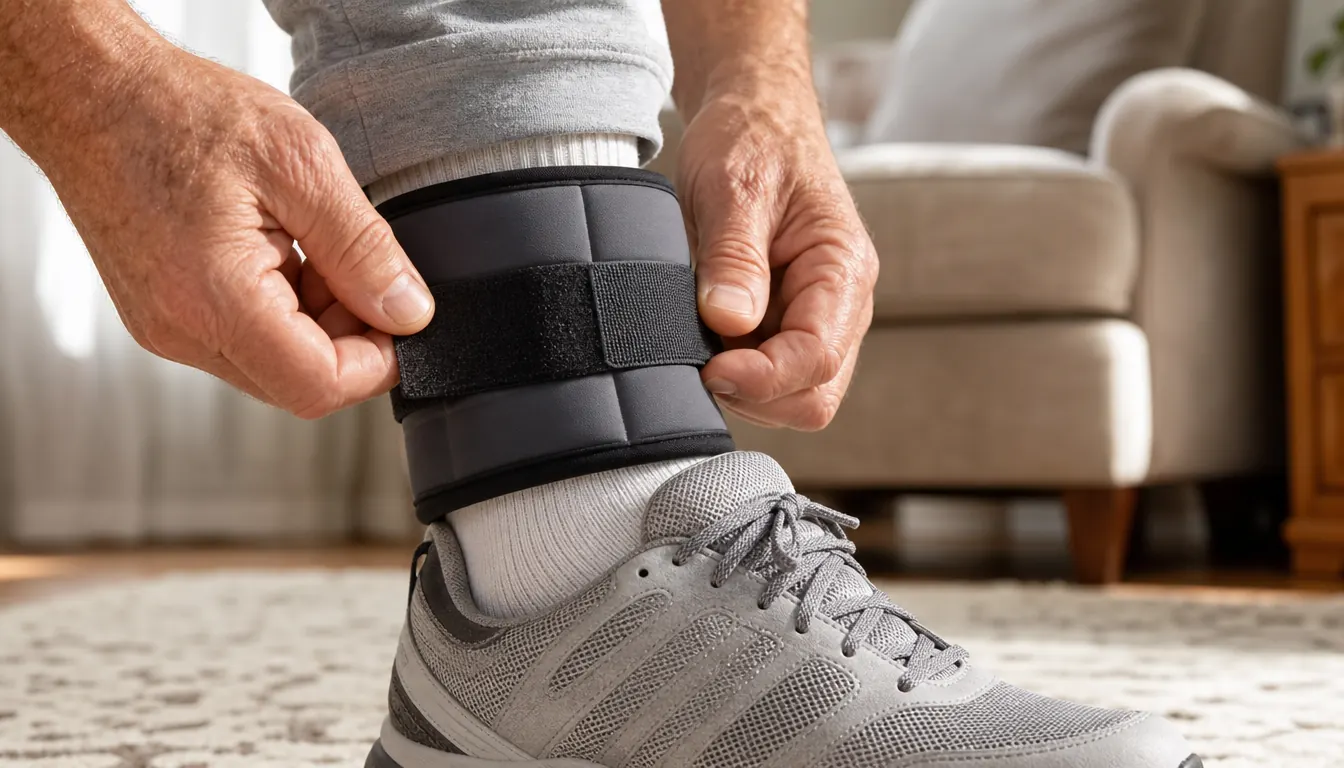
The fit is the second reason. The listing says the pair fits ankles from 7.5 to 12.5 inches. I cannot tell you what your ankle measures, but I can tell you to measure it before you buy. Mine fits inside that range with room to spare, and the hook-and-loop closure lets me snug it over a sock without cutting off circulation. The neoprene exterior, reinforced stitching, sturdy outer trim, and moisture-absorbing material are the kind of details that matter when you wear the same pair every morning. They are not glamorous. They are just sensible.
The Sportneer pair also covers more of the body than the name suggests. The listing lists ankle and wrist as target body parts, and it names walking, running, yoga, Pilates, rehab, physical therapy, and strength training among recommended uses. I am not going to run with them. I am 78, and my running days are behind me. But I do walk, and I do stand in the garage corner and lift one leg at a time. The pair handles that work without fuss.
One more practical point: the pair goes from 2 to 10 pounds. That is a wide range for one set. A wrist weight usually comes in a fixed size, and if you want more resistance you buy another pair. With the Sportneer pair, you add or remove the weights you already have. For a small house with limited closet space, that matters. I do not need a rack of weights. I need one pair that can be light on Monday and heavier on Friday.
Where the Wrist Weight Wins
Wrist weights win the arm-work argument, and they win it clearly. When I do seated arm curls, front raises, or slow punches while the coffee cools, a small wrist weight sits close to my hand and moves with me. It does not swing around my ankle, and it does not make me feel like I am wearing a piece of equipment. For older adults who spend most of their exercise time in a chair working on arm strength, a wrist weight is the simpler tool.
Wrist weights are also easier to store and easier to take to a chair by the window. They fit in a drawer. They fit in a suitcase. They do not take up the floor space that a pair of ankle weights can take. If your routine is mostly upper body, and you do not need lower-body resistance, a wrist weight is the clean choice. It does one job and does it without extra bulk.
There is a tradeoff, though. Wrist weights do not train the legs. They do not add resistance to walking. They do not give you the same anchored feeling at the ankle. And if you wear them during a long walk, they can change your arm swing, which is not always a good idea for an older body. I keep my wrist weights for seated arm work and leave them home when Dot and I walk after lunch. That is the honest division of labor in my house.
Some wrist weights are adjustable and some are fixed. The fixed ones are simple, but they lock you into one weight. The adjustable ones give you more range, but they can be bulkier. The Sportneer pair can be worn on the wrist according to the listing, but it is still an ankle-first design. If arm work is your main event, buy a wrist weight. If leg work is your main event, buy the ankle pair. If you want one set for both, the Sportneer pair is the compromise, and it is a reasonable one.
If Your Knees Do the Complaining, Start With the Ankle Pair
The Sportneer Adjustable Ankle Weights go from 1 to 5 pounds on each side, or 2 to 10 pounds for the pair. Measure your ankle first and check with your doctor or physical therapist before adding resistance.
Amazon See the Sportneer Pair on Amazon →
How I Use Each One in a Small House
My routine is not fancy. After coffee, I spend about 20 minutes in the living room. The carpet is thin, the armchair is sturdy, and the coffee table is pushed to the side. I start with slow marches in place. Then I do seated leg extensions. Then I stand beside the armchair and do side steps. The Sportneer pair is on my ankles for all of it. I keep the weight light enough that I can finish the sentence I am speaking. If I cannot talk while I move, the weight is too heavy.
On arm days, I sit in the same chair and use the wrist weights. I do slow curls, front raises, and a few presses toward the ceiling. I keep the range small. I do not lock my elbows. I do not swing. The wrist weights make that easy because they are close to my hands. The Sportneer pair can be worn on the wrist, but for seated arm work I prefer the smaller set. It is less fuss.
In the garage corner, I use the ankle pair for standing leg lifts. I hold the edge of the workbench. I lift one leg to the front, then to the side, then back. I keep the movement slow. The hook-and-loop closure stays put, and the weights do not slide down my ankle. That is the test I care about. A weight that slips is a weight that distracts. I do not need distraction. I need to finish my 20 minutes and get on with the day.
Dot walks with me most mornings. We leave the weights at home for the walk. I save the resistance for the living room and the garage. That is not a rule for everyone. It is just what works for two people in their seventies who want to keep moving without turning the living room into a gym. If you walk with weights, start light, keep the route short, and pay attention to how your knees and hips feel. And ask your doctor or physical therapist first.
The point is not to build a bodybuilder's routine. The point is to keep the joints moving and the muscles awake. Some mornings I do fewer repetitions. Some mornings I skip the weights and just walk. The Sportneer pair is there when I want it, and it is easy to set aside when I do not. That is the kind of equipment that survives in a small house. It does not demand a room. It just sits by the chair and waits.
The Sportneer pair goes from 2 to 10 pounds, and the listed ankle range is 7.5 to 12.5 inches. That is the plain reason it stays by my chair.
Fit, Closure, and the Details That Matter at 78
At 78, I care less about features than about whether a thing stays where I put it. The Sportneer pair uses a hook-and-loop closure. That is the same basic idea as a good shoe strap, and it lets me adjust the fit over a sock. The listing says it fits ankles from 7.5 to 12.5 inches. Measure your ankle before you order. If you are at the top of that range, pay attention. If you are below it, pay attention. A weight that is too loose will slide. A weight that is too tight will let you know.
The materials are plain: iron sand and neoprene. The listing says the exterior is neoprene, with reinforced stitching, sturdy outer trim, and moisture-absorbing material. I have worn mine on warm mornings, and I have not had a problem. I cannot speak for every ankle or every climate. I can speak for mine. The pair has held up to daily use in the living room and the garage. The stitching has not given out. The closure still holds.
The removable weights are the feature I use most. Each side adjusts from 1 to 5 pounds. The pair adjusts from 2 to 10 pounds. That means I can start light and add weight as I get stronger. It also means I can back off on a morning when my knees are stiff. That flexibility is worth more to me than any label. I do not need a wall of weights. I need one pair that can change with me.
There is one limitation I will not pretend away. The Sportneer pair is an ankle weight first. It is not as compact as a wrist weight, and it is not as easy to stash in a drawer. If you only want arm work, the ankle pair is more tool than you need. That is not a flaw. It is a fit issue. Buy the tool that matches the job.
Who Should Buy Which
Buy the Sportneer Adjustable Ankle Weights if your main goal is lower-body work. That means walking with a little resistance, leg lifts, seated leg extensions, side steps, or the kind of rehab and physical therapy exercises your therapist has cleared. The adjustable range from 2 to 10 pounds per pair gives you room to progress. The listed ankle fit of 7.5 to 12.5 inches gives you a way to check before you buy. And the hook-and-loop closure is simple enough to use every morning without thinking about it.
Buy wrist weights if your main goal is arm work. That means seated curls, front raises, shoulder work, or the kind of chair exercises that keep your upper body moving. Wrist weights are smaller, easier to store, and less bulky on the arm. They are not a substitute for ankle work, and ankle weights are not a substitute for wrist work. If you want one set for both, the Sportneer pair is listed for ankle and wrist use, but it is still an ankle-first design. Choose the job first, then the tool.
If you are new to resistance work, start lighter than you think you need. Do fewer repetitions than you think you need. Give your joints a week to tell you how they feel. And check with your doctor or physical therapist before you start, especially if you have knee, hip, shoulder, or balance problems. That is not a disclaimer I am adding to sound careful. It is the advice I would give Dot, and it is the advice I follow myself.
One Pair, Two To Ten Pounds, and a Chair to Hold
The Sportneer Adjustable Ankle Weights are the pair I keep by the armchair for leg work. Measure your ankle, start light, and clear it with your doctor or physical therapist.
Amazon See the Sportneer Pair on Amazon →